Mass. court rules shouldn’t prevent public from recording ICE
Boston court officer’s attempt to delete woman’s video of violent ICE abduction highlights need for reform
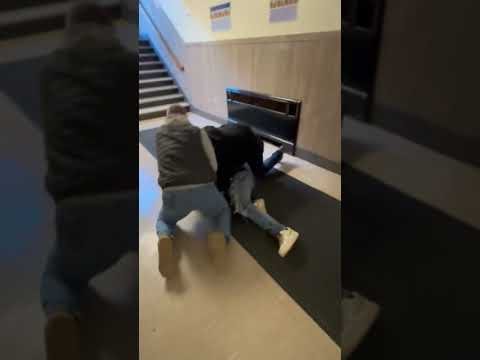
MassLive reports on the disturbing story of a woman who recorded a video of plainclothes ICE agents violently grabbing a man inside a Boston courthouse only for court officers to seize the woman’s phone and try to delete her video. The woman’s video, which she was able to recover, looks indistinguishable from a kidnapping.
Here’s what happened, according to MassLive:
Margaret is part of an underground neighborhood watchdog group in East Boston that monitors ICE activity — especially at East Boston District Court, where detainments by ICE have ramped up since spring.
When she noticed a cluster of unmarked vehicles with out-of-state plates, long antennas and metal grates on the windows circling the corner of Meridian and Elbow streets [the morning of January 8], she knew she had to double back.
Minutes later, standing in the courthouse lobby beside two plainclothes men who said they were “working with ICE,” she watched as a man was taken into custody as soon as he passed through the metal detectors — out of public view and inside the courthouse, where it is illegal to film without permission.
While an ICE detainment is not an unusual occurrence outside, or inside, of the East Boston District Courthouse, what was unusual was the man’s detainment happened right after he walked through the metal detectors, before he even stepped foot inside any courtroom that day.
Video obtained by MassLive shows two male ICE agents in jeans, boots and winter vests and jackets, struggling with another man in similar clothing — one grappling with each of his arms — in the courthouse lobby. One of the agents then leg-sweeps the man, bringing him quickly to the floor, as a third female ICE agent walked over to secure the man’s legs.
The video — recorded by Margaret, who tried to communicate with the man in Spanish as he was being detained — suddenly goes dark, as a trial court officer grabbed Margaret’s unlocked iPhone, stopped the recording, opened her Photos app and deleted the video, she said.
The court officer tried to have Margaret use her Face ID to unlock her “Recently Deleted” videos, but she refused, she said. He had her unlocked phone out of her sight for about 20 minutes while another court officer and a Boston police officer agreed with him, insisting upon the no-recording policy.
Only after Margaret went upstairs to a clerk, who consulted a judge, who then called the court officer in to speak with him, did Margaret get her phone back — and she was ultimately able to recover the video taken inside the lobby.
As the story notes, the Massachusetts Trial Court has a policy prohibiting the public from recording videos inside courthouses. If you make an unauthorized recording inside a courthouse, court officers can tell you to stop or remove you from the building. However, they should never attempt to delete your recordings, as happened here.
(Members of the media can record inside courtrooms but must first register with the Massachusetts Supreme Judicial Court and get permission from the presiding judge. That’s why when local court cases are covered on the news, you’ll see video from inside the courtroom but reporters will only interview the parties outside the courthouse.)
This story raises a serious First Amendment issue that, for the safety of Massachusetts residents, the state judiciary must resolve.
Federal courts have recognized that the government can place reasonable time, place, and manner restrictions on First Amendment-protected activity. However, the US Court of Appeals for the First Circuit, which includes Massachusetts in its jurisdiction, has also ruled that people have a First Amendment right to record law-enforcement officials performing their duties in public, even if the recordings are made surreptitiously.
There are certainly some good reasons for limiting recording in courthouses. To name one example, we’ve seen criminal cases like the Karen Read trial that attract so much media attention it would be impossible to walk around if the court let every interested journalist set up a tripod. But is the rule still reasonable if it’s so broad and inflexible that it prevents people from recording ICE agents when they forcefully take people into custody in public places? I don’t think so.
This policy deserves revisiting, especially in light of the brutal murder of Renée Nicole Good by ICE agent Jonathan Ross in Minneapolis on Wednesday. Bystander video clearly shows that Good was driving away from Ross, not at him, and that Good posed no threat to Ross when he shot and killed her. Video from Ross’s own phone shows that an ICE agent who hasn’t been identified and may have been Ross himself called Good a “fucking bitch” after he shot her. ICE agents prevented a neighbor who said he was a physician from aiding Good, and a witness told the HuffPost that around 15 minutes passed before EMS arrived.
After the slaying, US Department of Homeland Security Kristi Noem blatantly lied about what happened, falsely accusing Good of trying to run over Ross and of committing an “act of domestic terrorism.” Noem’s lies were echoed by Vice President JD Vance, who falsely claimed that Ross’s “life was endangered and he fired in self defense.” And President Donald Trump went even further with his lies, falsely claiming that Good “viciously ran over” Ross. Officials have not charged Ross for the killing.
This out-of-control violence by ICE agents and these shameless lies by officials at the highest levels of government show exactly why ICE watchers in Massachusetts need to be free to record ICE activity even in courthouses.
ICE’s presence at courthouses harms the judicial process by intimidating victims and witnesses from attending court. And the camera ban encourages ICE agents to specifically target people in court because they know courthouses are some of the few public places where the public isn’t allowed to record their actions. It endangers community members, whether they are being targeted by ICE or just observing, by allowing agents to use excessive force and commit misconduct without scrutiny.
As the MassLive story notes, ICE activity in Massachusetts courthouses vastly increased in 2025. According to the story: “ICE courthouse arrests increased to nearly 400 arrests in the first nine months of 2025. Comparatively, ICE arrested about 130 people during the same time period in 2024, according to data compiled by the Deportation Data Project at the University of California Berkeley School of Law.”
The rigid rule against cameras in courthouses means that as more and more ICE activity moves inside courthouses, the less members of the public are able to exercise their First Amendment rights in situations involving ICE.
It’s bad enough that the state judiciary isn’t stopping ICE from carrying out these courthouse abductions in the first place. They shouldn’t be actively encouraging it by turning courthouses into First Amendment-free zones. Perhaps someone who is affected by the camera ban will sue in an effort to force officials to change the policy, but officials shouldn’t wait for that to happen—they should do something about it now.
I’ve heard some people throw up their hands and say that there’s nothing concrete for state officials to do about ICE in Massachusetts. Reforming this camera ban is low-hanging fruit. Everyone in a position of influence should call on the judiciary to address this issue as soon as possible.
Until the Massachusetts judiciary changes the policy, ICE watchers who are willing to break the rule for the greater good should take steps to make it more difficult to delete their videos, like password-protecting their phones and automatically uploading their videos to the cloud. And above all, they should be careful—ICE is a danger to our community.
Cameras also banned in federal court
The court rules I mentioned above apply only in Massachusetts state courts. The rules are even more restrictive in federal courts, where members of the media are not even permitted to record inside courtrooms. That’s why you still see the archaic courtroom sketch on the news whenever the media covers a high-profile federal case. The camera ban in federal court is something I’ve long said should change.
 Andrew Quemere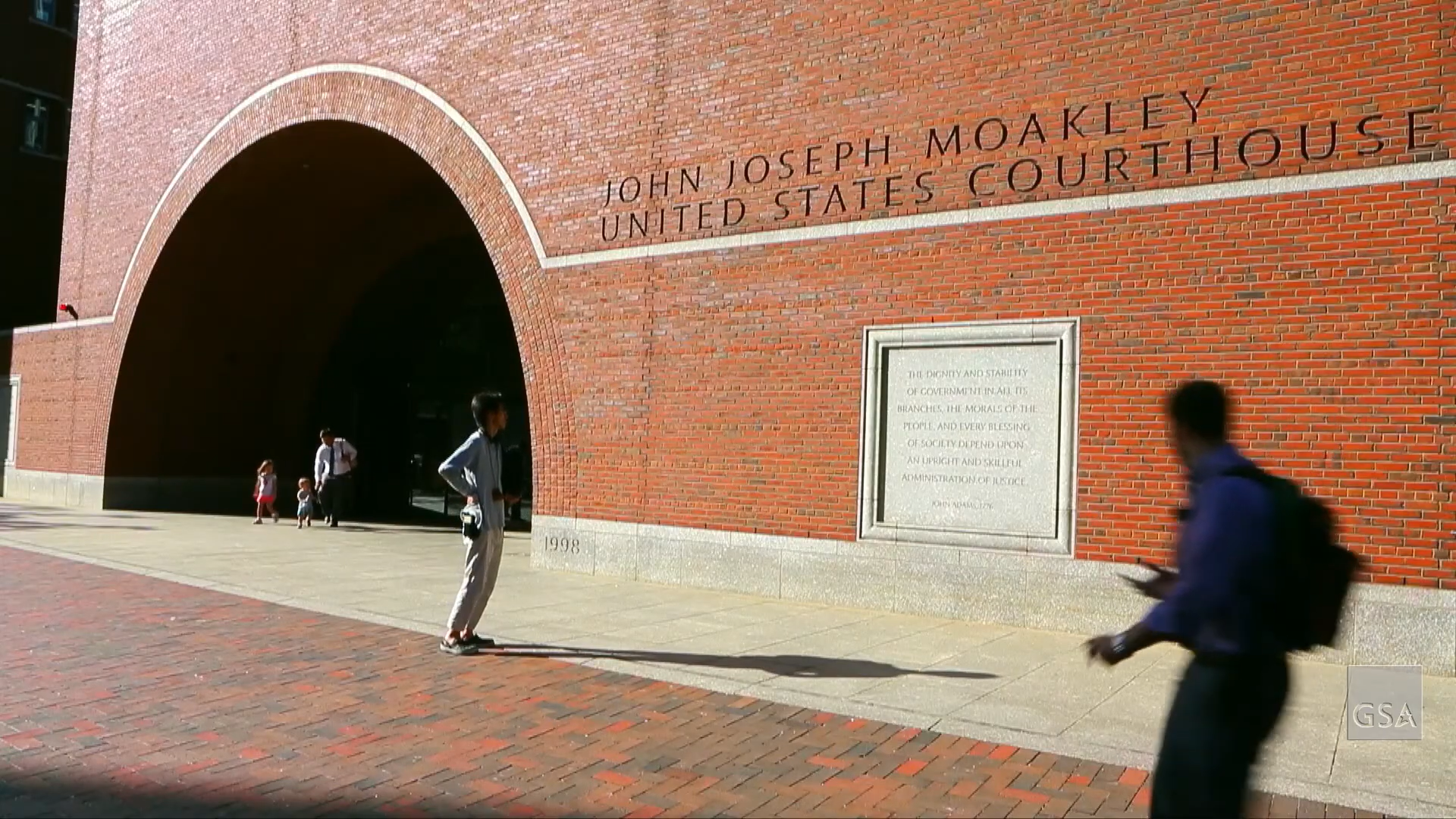
An “expert” at violating civil rights
On the subject of the murder of Renée Nicole Good, NBC10 Boston published a story on Thursday in which they shared the analysis of purported “law enforcement experts,” one of whom—inexplicably—was Thomas Hodgson, the former Bristol County sheriff and Massachusetts chair of Donald Trump’s last two presidential campaigns.
NBC10 noted Hodgson’s connection to Trump but neglected to mention that he’s on the board of directors for the Federation for American Immigration Reform, which the Southern Poverty Law Center identifies as an anti-immigrant hate group.
According to the NBC10 story:
Hodgson … says the video [of the shooting] does not relay the perceived threat of moving car [sic].
“You don’t have time to react other than your training to disarm the threat,” Hodgson said. “In this case, with the amount of space he had, who knows?”
Besides the fact that Hodgson is obviously lying about the supposed “threat” Good posed, it should be pointed out that Hodgson was not a police officer or federal agent. He was an elected official who administered a jail. It wasn’t his job to carry a gun or arrest people. It’s unclear what relevance his opinion has here.
It’s also noteworthy that the Massachusetts Attorney General’s Office found in a report that Hodgson was personally involved in violating the civil rights of immigrant detainees when he was sheriff.
According to WBUR’s coverage of the report:
After a months-long investigation, the attorney general determined Hodgson and his staff used excessive force in their response to a disturbance among some immigration detainees [in May 2020], employing a variety of weapons, including a flash bang grenade, pepper spray and pepper-balls, anti-riot shields and canines.
“Our investigation revealed that the Bristol County Sheriff’s Office violated the rights of detainees by using excessive force and by seriously risking their health and safety,” [then-Massachusetts Attorney General Maura] Healey said. “This callous disregard for the well-being of immigration detainees is unacceptable and must be addressed through the significant reforms we outline in our report.”
The story goes on to say:
The report also noted Hodgson recorded video of much of the activity in the recreation pen on his personal cell phone. “We noted two incidents in particular where officers brought detainees to their knees directly in front of Sheriff Hodgson before loading them in the transport van,” the report states.
Hodgson refused to provide the AG’s office with video footage from his cell phone.
The current Bristol County sheriff, Paul Heroux, settled a lawsuit related to the incident in November, according to WPRI.
This xenophobic delinquent is who NBC10 turned to for “expert” analysis after a federal agent shot a woman dead in the streets. That would be disgusting and shameful even if they bothered to provide context on his history as sheriff. You can send NBC10 feedback on this decision here.
“Wasting public money to keep the public in the dark”
While we’re on the subject of law-enforcement transparency, I won a public records lawsuit against the Northwestern District Attorney’s Office! If you missed the news, here’s what I wrote last week:
Northwestern District Attorney David Sullivan’s office cannot block the public from seeing the names and case numbers of police officers who have been charged with crimes like possession of child pornography, assault and battery, and driving under the influence, a judge ruled on December 30.
After The Mass Dump requested the information under the Massachusetts Public Records Law in January 2022, prosecutors insisted that they must withhold the names of the accused officers and the case numbers under a state law intended to protect people’s criminal records. That refusal led the Dump to file a June 2023 lawsuit alleging that Sullivan’s office was misapplying the law and acting in bad faith. In response, Sullivan hired a private law firm at taxpayer expense to resist releasing the information.
In a ruling on December 30, nearly four years after the Dump first requested the records, Suffolk County Superior Court Justice Julie Green ruled that the names and case numbers were not protected and that Sullivan’s office must disclose them. She also ordered the district attorney’s office to pay the Dump’s legal fees. However, she ruled that prosecutors did not act in bad faith by withholding the information.
The Dump’s public records request sought the district attorney’s Brady disclosures about police officers. These documents—which are named after a 1963 US Supreme Court decision—are used by prosecutors to inform defendants in criminal cases about alleged misconduct by officers testifying against them. Prosecutors are required to make these disclosures so that defendants can challenge the officers’ credibility in court.
You can read more about the legal victory here:
 Andrew Quemere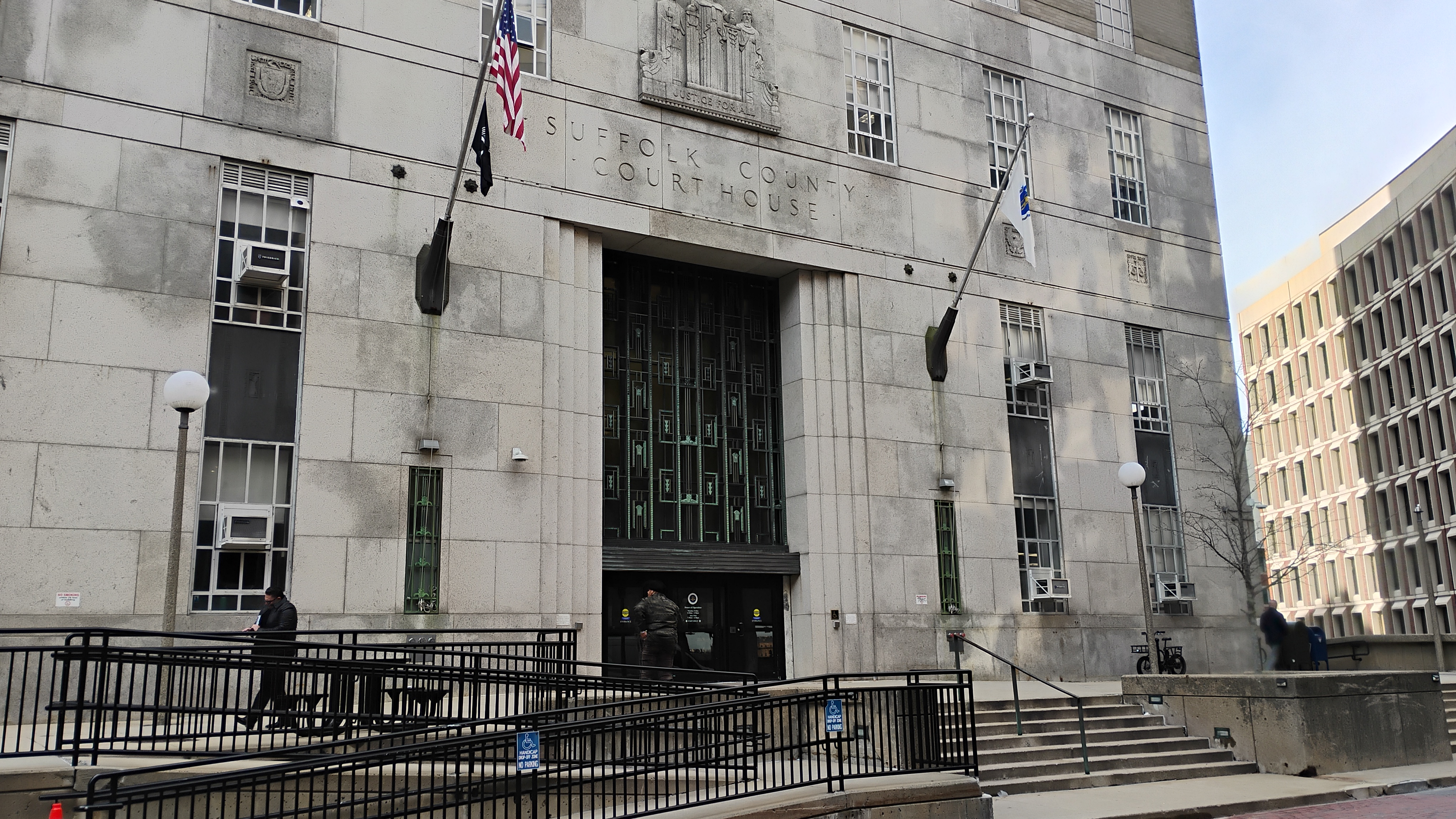
If you read the story when it was first published, you might have missed the update that I added the following day. Butters Brazilian, the private law firm that prosecutors hired to fight my lawsuit, charged taxpayers an additional $1,750 in December, according to records released by the district attorney’s office. That brings the total amount of tax dollars prosecutors have spent on the private law firm to $18,620.84.
I was interviewed about the lawsuit by a number of journalists last week. I want to thank Dusty Christensen of The Shoestring for being the first. Here’s what I told him:
[Andrew] Quemere said he hopes Sullivan’s office turns over the records, as the judge ordered. If Sullivan does plan to appeal, he has to file notice within 30 days of the court’s decision, which is dated Dec. 30, 2025.
“The DA’s office has been wasting public money to keep the public in the dark, using taxpayer money to prevent taxpayers from seeing what their tax dollars are being spent on,” he said. “I think that’s very unfortunate.”
…
Quemere said it was obvious from the beginning that the Brady disclosures were public records. And he said that although the DA’s office argued that it wasn’t giving special treatment to police officers by protecting information about their criminal offenses, he found that hard to believe. He said that the office often issues public press releases about civilians with the same kind of information contained in the Brady disclosures.
Quemere said the case showed how public entities like Sullivan’s office can use the weakness of Massachusetts’ public records law, which gives no ability to the state’s supervisor of records to enforce her decisions about what records should be public. That leaves journalists like Quemere with two choices: drop their pursuit of public records or sue for them.
“I think part of the problem with our state’s public records law is that it doesn’t serve as a very good deterrent of obstructing the release of information that everyone knows should be public,” he said.
You can read the rest of The Shoestring’s story here.
Thanks for reading! As always, if you’d like to keep The Mass Dump running, please consider becoming a financial supporter either by signing up for a paid subscription to this newsletter below, becoming a Patreon supporter, or sending a tip via PayPal or Venmo. I rely on your support to keep doing this work, and a monthly subscription is just $5!
Even if you can’t afford a paid sub, please sign up for a free one to get updates about this story, and please share this article on social media.
You can follow me on Bluesky and Mastodon. You can email me at aquemere0@gmail.com.
Anyway, that’s all for now.