VICTORY: Northwestern DA must release names of cops charged with crimes, judge rules
DA’s office ordered to release accused officers’ names and case numbers—and pay The Mass Dump’s legal fees
Northwestern District Attorney David Sullivan’s office cannot block the public from seeing the names and case numbers of police officers who have been charged with crimes like possession of child pornography, assault and battery, and driving under the influence, a judge ruled on December 30.
After The Mass Dump requested the information under the Massachusetts Public Records Law in January 2022, prosecutors insisted that they must withhold the names of the accused officers and the case numbers under a state law intended to protect people’s criminal records. That refusal led the Dump to file a June 2023 lawsuit alleging that Sullivan’s office was misapplying the law and acting in bad faith. In response, Sullivan hired a private law firm at taxpayer expense to resist releasing the information.
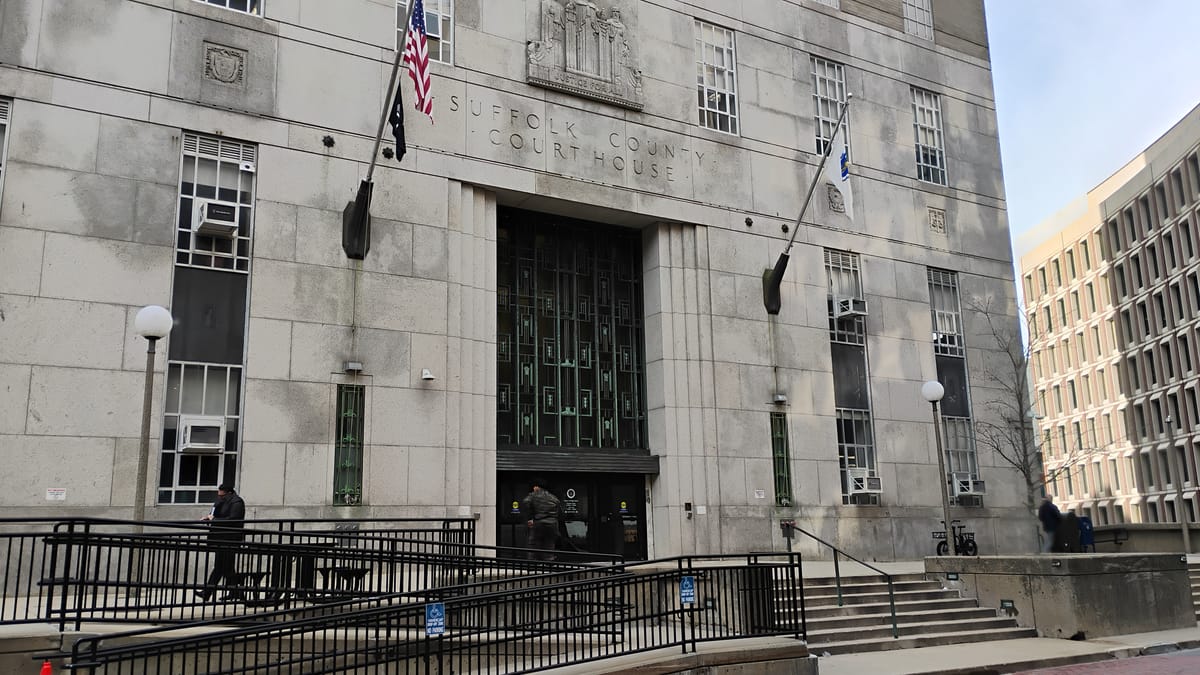
In a ruling on December 30, nearly four years after the Dump first requested the records, Suffolk County Superior Court Justice Julie Green ruled that the names and case numbers were not protected and that Sullivan’s office must disclose them. She also ordered the district attorney’s office to pay the Dump’s legal fees. However, she ruled that prosecutors did not act in bad faith by withholding the information.
The Dump’s public records request sought the district attorney’s Brady disclosures about police officers. These documents—which are named after a 1963 US Supreme Court decision—are used by prosecutors to inform defendants in criminal cases about alleged misconduct by officers testifying against them. Prosecutors are required to make these disclosures so that defendants can challenge the officers’ credibility in court.
Sullivan’s office provided copies of the Brady disclosures but blacked out the names of officers who had been charged with crimes, citing the state’s Criminal Offender Record Information (CORI) law. His office also removed docket numbers that were associated with the officers’ criminal cases and with the cases in which the officers were potential witnesses. Docket numbers are identification numbers that courts assign to cases; the public can use them to look up and obtain court records related to those cases.
Green ruled that releasing the officers’ names and case numbers is not prohibited by the CORI law because all the information can be found in public court records and releasing it would not allow anyone to compile the officers’ complete criminal records.
“This ruling preserves the purpose of the CORI statute—to prevent people from obtaining wholesale criminal records outside of the proper channels—while also allowing for meaningful public accountability,” said the Dump’s attorney, Mason Kortz. “We hope that other district attorneys will abide by this ruling if they receive similar requests in the future.”
Kortz, a clinical instructor at Harvard Law School’s Cyberlaw Clinic, represented the Dump pro bono. Students from the law clinic helped him prepare the case, allowing them to “see firsthand how slow and complicated, but ultimately rewarding, public interest lawyering can be,” he said.
Through a spokesperson, DA Sullivan declined to comment about the ruling or respond to a list of emailed questions.

According to Green’s decision, the CORI law includes an exception for “chronologically maintained court records of public judicial proceedings,” and the Massachusetts Supreme Judicial Court has ruled that defendants’ names and docket numbers fall under this exception.
Green noted that the officers’ names and case numbers are listed in court dockets. She said these documents are public records that are available to view at courthouses and any information contained in them is a public record. It did not matter, she said, that the Dump requested this information from the district attorney’s office rather than searching through court records.
Green said that the other information included in the Brady letters—the charges against the officers, the courts in which they were filed, and the status of the cases—is also information available from public court records and therefore not CORI.
The only information in the letters not included in public court records, the judge said, was the fact that the district attorney’s office determined the charges against the named officers warranted Brady disclosures. However, she said this information was not CORI because it is not related to the nature or disposition of a criminal charge.
In a 2020 decision cited by Sullivan’s office, the Supreme Judicial Court ruled that prosecutors could redact names and docket numbers in response to a Boston Globe request for the data on every criminal case in their internal case-management systems.
However, Green said that the 2020 case was different because the Globe’s request “was so broad that it effectively allowed the requestor to compile an entire criminal history for any given defendant,” which would have undermined the purpose of the CORI law. She said that the data sought by the Globe included ID numbers for each defendant that could be used to link together all cases involving a specific person.
According to Green, this case more closely resembled a 2003 decision in which the Supreme Judicial Court ruled that district attorneys were required to release names and docket numbers after the Globe requested information about cases of alleged corruption by local officials over a five-year period.
Similarly, Green said, the records requested by the Dump “do not undermine the CORI statute because they would not allow the requestor to compile a criminal history of any given individual.”
The documents only include information about charges against officers that the district attorney’s office deemed to require a Brady disclosure and cases against other defendants in which prosecutors made disclosures, rather than all cases against the officers and other defendants, she said.
Green ordered the district attorney’s office to pay the Dump’s legal fees, saying the Public Records Law includes the presumption in favor of awarding attorney’s fees when someone successfully sues the government for denying a records request. She said the district attorney’s office had not offered any reason as to why fees should not be awarded.
However, the judge stopped short of finding that Sullivan’s office acted in bad faith by blacking out the information, as the Dump alleged in its lawsuit. If Green had ruled that prosecutors acted in bad faith, she could have fined the district attorney’s office up to $5,000 in punitive damages.
“If the [district attorney’s office] had not redacted the information and a court later determined it to be CORI, the disclosure would have irretrievably destroyed the confidentiality of information protected by the CORI act,” Green said.
She added that there can be criminal penalties for government employees who unlawfully disclose CORI.
In addition to being on the hook for the Dump’s legal fees, Sullivan’s office has spent thousands of taxpayer dollars on a private legal counsel to fight disclosing the officers’ names.
Sullivan’s office is represented by two attorneys from the Boston-based private law firm Butters Brazilian. The district attorney’s office agreed to pay $350 an hour for each of the two attorneys and $75 an hour for the work of clerks and paralegals, according to a July 2023 agreement obtained by making a public records request.
Butters Brazilian has charged taxpayers $16,870.84 for its work on the lawsuit as of November, according to invoices released by the district attorney’s office. That figure does not reflect charges for December, when Green heard oral arguments for the case. The Dump requested updated billing records for December, but Sullivan’s office has not yet responded.
Sullivan said in a 2023 radio interview that his office wasn’t giving special treatment to police by withholding the names of officers who had been charged with crimes. However, the DA’s office regularly shares the names of criminal defendants and other information about their cases in online press releases.
It’s unclear whether the district attorney’s office will appeal Green’s ruling, but Sullivan implied in the 2023 interview that he planned to do so if his office lost the case.
“If it’s got to go up to the Supreme Court for them to make that decision whether the Public Records Law overrides the CORI law, then we’ll let the Supreme Court decide,” he said at the time.
When the Dump first requested the Brady disclosures in January 2022, prosecutors initially blacked out the names of every police officer, whether they had been charged with crimes or faced internal investigations for alleged misconduct.
At the time, Sullivan’s office cited the Public Records Law’s privacy exemption—even though this exemption explicitly says that it “shall not apply to records related to a law enforcement misconduct investigation.”
It wasn’t until May 2024 when Sullivan’s office agreed to provide the Dump with the names of officers who faced internal investigations. The reversal came about only after the Supreme Judicial Court ruled in a separate case that the Bristol County District Attorney’s Office couldn’t invoke the privacy exemption to conceal the names of officers in records related to a misconduct investigation of a fatal police shooting.
Before going to court, the Dump filed three administrative appeals with the state’s supervisor of public records, the transparency watchdog who serves in the Massachusetts Secretary of the Commonwealth’s Office. All three times, the supervisor found that Sullivan’s office had failed to justify redacting the names and docket numbers.
“While we’re happy with the ruling, it’s important to recognize that the supervisor of records reached the same conclusion in 2022,” Kortz said. “This could have been resolved quickly and without spending tens of thousands of dollars of public money if the district attorney’s office had complied with the supervisor’s order back then.”
UPDATE: After publication, Melissa Sippel, a spokesperson for the Northwestern District Attorney’s Office, provided this statement:
We are pleased the court found that we acted in good faith in attempting to prevent the unlawful disclosure of Criminal Offender Record Information (“CORI”). We continue to review the court’s decision to determine whether to pursue an appeal. Given the pending litigation, we cannot comment further at this time.
UPDATE (1/8/2026): Butters Brazilian charged taxpayers an additional $1,750 for its work fighting the lawsuit in December, according to records released by the district attorney’s office. That brings the total amount of tax dollars prosecutors have spent on the private law firm to $18,620.84.
You can read the judge’s ruling here. You can watch oral arguments for this case below:
Thanks for reading! This ruling has been a long time in the making. If you’d like to support more work like this, please consider becoming a financial supporter of The Mass Dump, either by signing up for a paid subscription to this newsletter below, becoming a Patreon supporter, or sending a tip via PayPal or Venmo. I rely on your support to keep doing this work, and a monthly subscription is just $5!
Even if you can’t afford a paid sub, please sign up for a free one to get updates about this story, and please share this article on social media. You can follow me on Bluesky and Mastodon. You can email me at aquemere0@gmail.com.
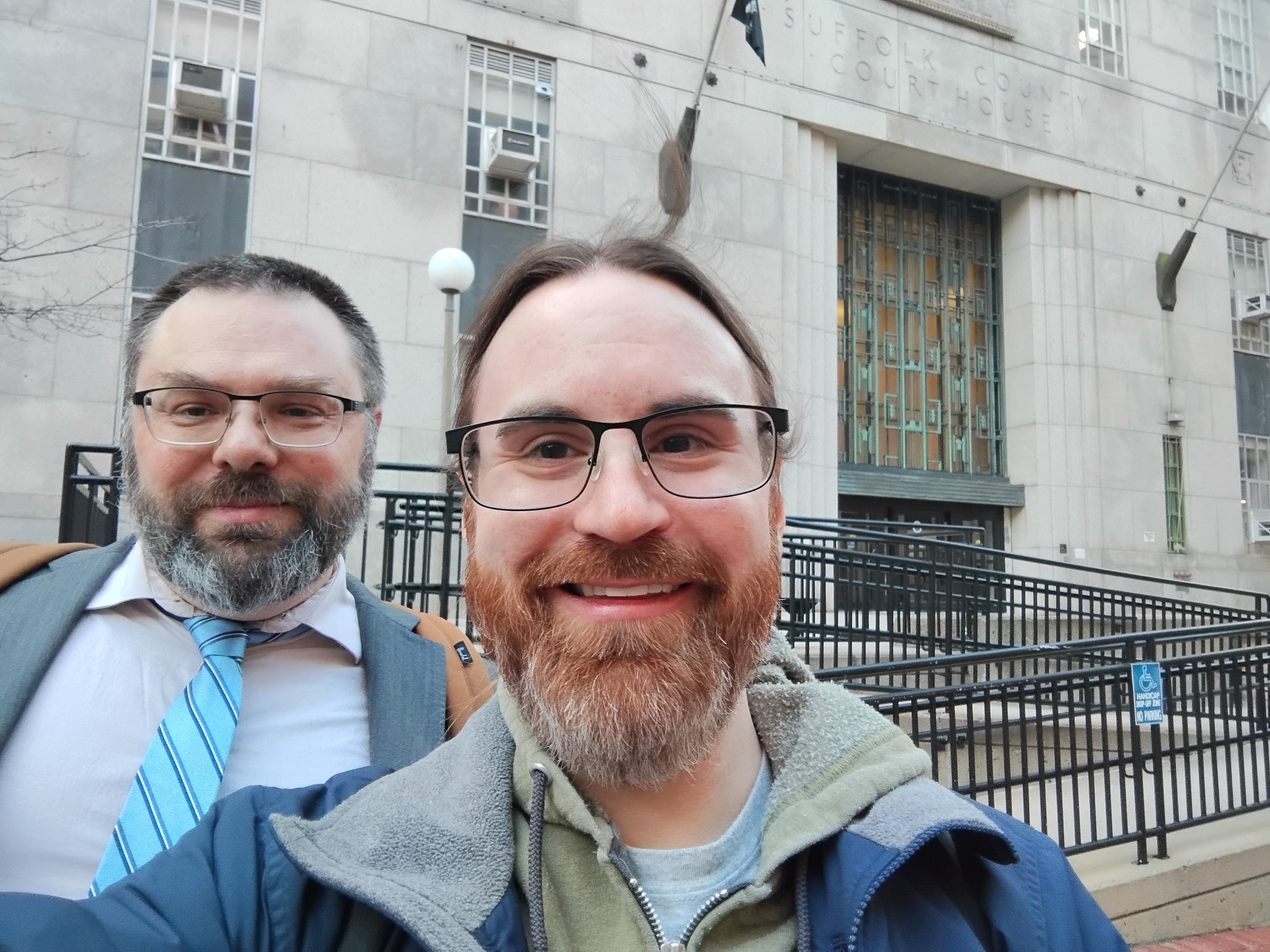
I’d like to give a huge hand to my attorney, Mason Kortz, who—along with his students—did tremendous work fighting for transparency in my case.
If you’re a new reader, please check out my reporting on the case of James Carver and the Elliott Chambers Rooming House fire. As proud as I am of the outcome of my lawsuit, I consider this story the most important thing I worked on last year.
 Andrew Quemere
Anyway, that’s all for now.