Faced with transparency lawsuit, Northwestern DA used private lawyer who gave money to his campaign
That lawyer is now on the Massachusetts State Ethics Commission
After blocking the public from seeing the names of police officers charged with crimes, Northwestern District Attorney David Sullivan faced a 2023 Mass Dump lawsuit. To defend his office, the elected official turned to a lawyer who gave money to his campaign.
Now that lawyer, Patrick Hanley, sits on the Massachusetts State Ethics Commission. Hanley was appointed to the commission in 2025 by Governor Maura Healey, to whom he also contributed money.
Hanley, a partner at the Boston-based law firm Butters Brazilian, signed an agreement in July 2023 to represent Sullivan’s office. Hanley’s employer was awarded a no-bid contract to represent the district attorney’s office after the lawyer donated to Sullivan’s campaign twice—and he donated again while representing the office.
Ultimately, the arguments advanced by Sullivan’s outside counsel did nothing but delay the release of public information. In December 2025, a judge ruled against the district attorney’s office and ordered it to produce the names of the accused officers.
Before the district attorney’s office signed the agreement with Hanley, the lawyer made two $500 contributions to Sullivan, one in April 2021 and the other in April 2022, according to records from the Massachusetts Office of Campaign and Political Finance. Hanley then gave an additional $250 to Sullivan in January 2025, while representing his office, the OCFP records show.
Melissa Sippel, a spokesperson for Sullivan’s office, declined to comment when asked whether Hanley’s political contributions played any role in the decision to use his legal services. Hanley did not respond to an emailed list of questions.
According to the July 2023 agreement, the district attorney’s office agreed to pay Butters Brazilian $350 an hour each for the work of Hanley and a second attorney and $75 an hour for the work of clerks and paralegals.
Butters Brazilian charged taxpayers $22,044.01 for its work on the lawsuit, according to invoices released by the district attorney’s office. Of that amount, $12,495 was for Hanley’s hours, the records show. It’s unclear how much the law firm paid Hanley for his work.
According to Hanley’s statement of financial interest for 2024, which was obtained by State Reference, he obtained between $1,001 and $5,000 worth of income from representing the Northwestern District Attorney’s Office “in [a] public records matter” that year. The document says that in 2024, Hanley owned 16 percent of Butters Brazilian’s stock and was paid $100,001 or more by the law firm.
The district attorney’s office awarded Butters Brazilian the contract without a competitive bidding process. In response to a records request for documents related to a bidding process, the office said it did not possess any. Although state law generally requires government bodies to conduct such a process when awarding contracts valued at $10,000 or more, the statute includes an exception for lawyers.
Despite the exception, government bodies sometimes solicit bids when seeking legal services. They have done so nearly 500 times since January 2005, according to data from COMMBUYS, the state’s online platform for the procurement of contract services.
Sippel declined to say why the district attorney’s office did not use a competitive bidding process or how prosecutors selected Butters Brazilian.
Governor Healey appointed Hanley to the State Ethics Commission in June 2025, according to a news release. Hanley made six political contributions totaling $2,000 to Healey between 2021 and 2023, according to OCFP records.
A spokesperson for the governor’s office did not respond when asked whether the contributions influenced Healey’s decision to appoint Hanley to the commission.
Hanley has contributed more than $15,000 to candidates over the years, the OCFP records show. He has given money to other district attorneys, including Middlesex County District Attorney Marian Ryan and Suffolk County District Attorney Kevin Hayden.
Hanley’s last contribution—which was $500 to Hayden—was in March 2025, three months before he joined the State Ethics Commission. His second most recent contribution was to Sullivan.
Lawsuit cost taxpayers tens of thousands of dollars
The Dump’s lawsuit against the Northwestern District Attorney’s Office has its origins in a January 2022 public records request that sought Brady disclosures about police officers.
The Brady documents—named after a 1963 US Supreme Court decision—are used by prosecutors to inform defendants in criminal cases about alleged misconduct by officers testifying against them. Prosecutors are required to make these disclosures so that defendants can challenge the officers’ credibility in court.
Sullivan’s office provided copies of the Brady disclosures but blacked out the names of officers who had been charged with crimes, citing the state’s Criminal Offender Record Information (CORI) law. His office also removed case numbers that were associated with the officers’ criminal cases and with the cases in which the officers were potential witnesses.
After prosecutors refused to release the unredacted records, the Dump filed a June 2023 lawsuit alleging that Sullivan’s office was misapplying the CORI law and acting in bad faith. In response, Sullivan hired Butters Brazilian at taxpayer expense to resist releasing the information.
In a decision on December 30, nearly four years after the Dump first requested the records, Suffolk County Superior Court Justice Julie Green ruled that the names and case numbers were not protected by the CORI law. However, she ruled that prosecutors did not act in bad faith by withholding the information.
Green noted that the officers’ names and case numbers are listed in court dockets. She said these documents are public records that are available to view at courthouses and any information contained in them is a public record. It did not matter, she said, that the Dump requested this information from the district attorney’s office rather than searching through court records.
 Andrew Quemere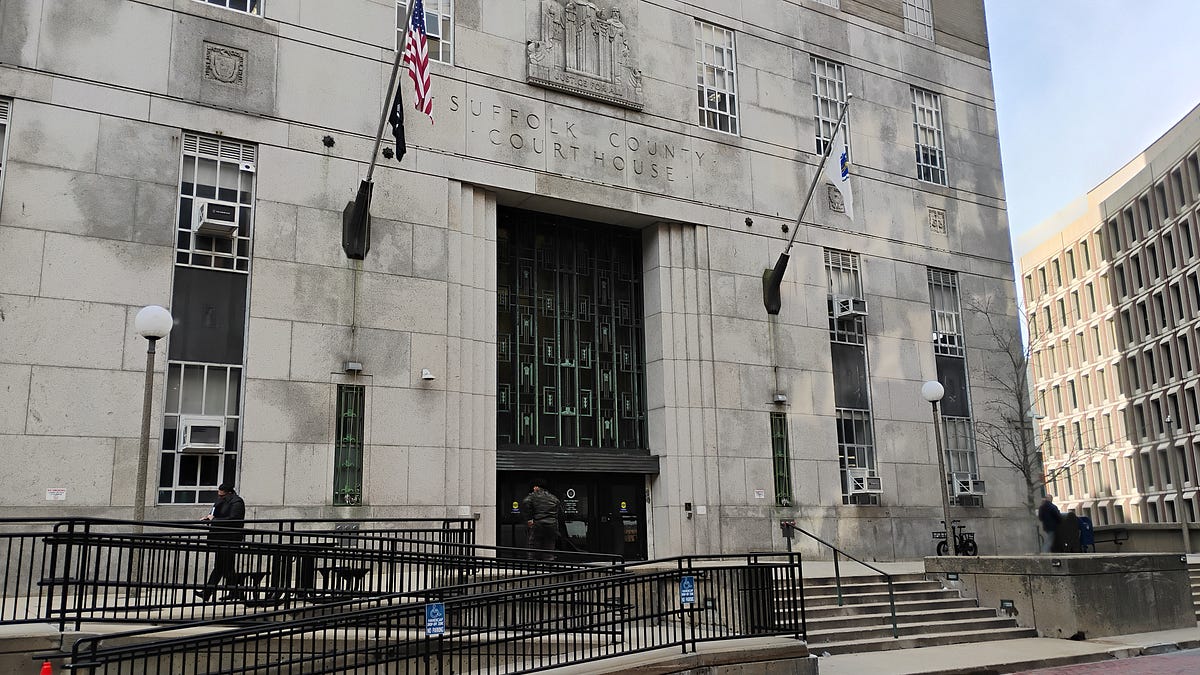
The Butters Brazilian attorneys said in court documents and oral arguments that it would be illegal and potentially criminal for Sullivan’s office to release the names of police officers who had been charged with crimes.
But after receiving the unredacted Brady records from the district attorney’s office in March, the Dump reported that prosecutors had already published the names of two of the officers and details about their criminal cases in online press releases and other self-laudatory documents.
In one public document, the office used details of an officer’s criminal case to praise the “phenomenal job” done by First Assistant District Attorney Steven Gagne—the prosecutor who signed the agreement with Butters Brazilian and approved the firm’s invoices.
Andrew Quemere
In addition to the money it spent on private legal counsel, the district attorney’s office paid the Dump’s legal fees in March after Green ordered it to do so. Prosecutors cut a $12,480.87 check to the Harvard Cyberlaw Clinic—which brought the total cost of the litigation to more than $34,000 of public money.
The Dump offered to waive its legal fees if Sullivan’s office would agree to adopt a policy requiring it to post its police misconduct records on its website so the public could more easily access them. However, the office declined without providing an explanation.
Andrew Quemere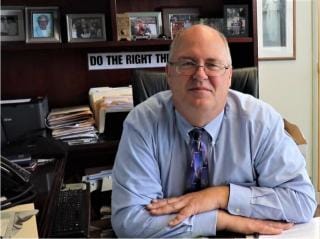
When the Dump requested the Brady disclosures in January 2022, prosecutors initially blacked out the names of every police officer, whether they had been charged with crimes or faced internal investigations for alleged non-criminal misconduct.
At the time, Sullivan’s office cited the Public Records Law’s privacy exemption—even though this exemption says that it “shall not apply to records related to a law enforcement misconduct investigation.”
It wasn’t until May 2024 when Sullivan’s office agreed to disclose the names of officers who faced internal investigations. The reversal came about only after the Massachusetts Supreme Judicial Court ruled in a separate case that the Bristol County District Attorney’s Office couldn’t invoke the privacy exemption to conceal the names of officers in records related to a misconduct investigation of a fatal police shooting.
Before going to court, the Dump filed three administrative appeals with the state’s supervisor of public records, the transparency watchdog who serves in the Massachusetts Secretary of the Commonwealth’s Office. All three times, the supervisor found that Sullivan’s office had failed to justify redacting the names and case numbers under the privacy exemption or the CORI law.
In recent comments to the Daily Hampshire Gazette, the spokesperson for the district attorney’s office denied that prosecutors delayed the release of the unredacted Brady records.
“Any claim that the NWDAO delayed this process is unfounded,” Sippel said. “While it is true that most court proceedings take quite some time to resolve, the NWDAO did not cause or contribute to any unnecessary or unusual delay in this case.”
However, the legal proceedings were only necessary because the district attorney’s office repeatedly refused to provide the unredacted records.
Thanks for reading! Journalism like this takes a lot of time and effort. If you’d like to keep The Mass Dump running, please consider offering your financial support, either by signing up for a paid subscription to this newsletter below, becoming a Patreon supporter, or sending a tip via PayPal or Venmo. Your support pays for this aggregation project and original investigative reporting. A monthly subscription is just $5.
Even if you can’t afford a paid sub, please sign up for a free one to get news about wrongful convictions, police misconduct, public records, and stuff like that—and please share this article on social media.
You can follow me on Bluesky and Mastodon. You can email me at aquemere0@gmail.com.
That’s all for now.