After losing police transparency lawsuit, Northwestern DA declines to release discussions with outside counsel
Communications could shed light on prosecutors’ decision to keep the public in the dark about police misconduct

After a failed legal fight to block the public from seeing the names of police officers who were charged with crimes, Northwestern District Attorney David Sullivan’s office is refusing to release communications with its private legal counsel that could shed light on prosecutors’ decision to keep the public in the dark.
The Mass Dump in January 2022 requested disclosures about police misconduct that prosecutors are required to provide to defendants in criminal cases. In response, prosecutors insisted that they must black out the names of criminally charged officers and case numbers under a state law intended to protect people’s criminal records. The Dump filed a June 2023 lawsuit alleging that Sullivan’s office was misapplying the law and acting in bad faith. In response, the office hired a private law firm at taxpayer expense to resist releasing the information.
In a ruling on December 30, nearly four years after the Dump first requested the records, Suffolk County Superior Court Justice Julie Green ruled that the names and case numbers were not protected. She ordered Sullivan’s office to disclose them and pay the Dump’s legal fees.
The district attorney’s office has maintained that it did nothing wrong by blocking the public from seeing the officers’ names, arguing that its employees could have been prosecuted for improperly releasing the information. And the judge, despite finding that the information was public, agreed that prosecutors acted in good faith.
But after receiving the unredacted Brady records from the district attorney’s office in March, the Dump reported that prosecutors had already published the names of two of the officers and details about their criminal cases in online press releases and other self-laudatory documents—something the district attorney’s office never told the judge.
 Andrew Quemere
In one public document, the office used details of an officer’s criminal case to praise the “phenomenal job” done by First Assistant District Attorney Steven Gagne—the prosecutor who signed an agreement with a private law firm to defend against the lawsuit and approved the firm’s invoices.
In April, after the lawsuit was settled, the Dump requested the district attorney’s office’s written communications with the outside lawyers to learn more about why prosecutors decided to conceal the police officers’ identities from the public.
Sullivan’s office responded by hiding the communications behind attorney-client privilege.
Although a government agency can invoke attorney-client privilege to shield legal advice from the public, it is not required to do so. And because the lawsuit was settled, there is no longer any strategic reason for the district attorney’s office to keep the communications private.
Melissa Sippel, a spokesperson for the district attorney’s office, declined to answer questions about why prosecutors won’t release the records.
After Sullivan’s office declined to provide the communications, the Dump filed an appeal with the supervisor of public records, the transparency watchdog who serves in the Massachusetts Secretary of the Commonwealth’s Office.
Normally when a municipality or state agency withholds public records, the supervisor of records has the discretion to conduct an in camera review (i.e., a private review) of the records to determine whether they are exempt. But when officials invoke attorney-client privilege, the supervisor cannot require the government body to provide records for review and can only require it to produce a privilege log.
According to state law, the log must include “a detailed description of the record, including the names of the author and recipients, the date, the substance of such record, and the grounds upon which the attorney-client privilege is being claimed.”
In response to the appeal, the district attorney’s office produced a log that lists 29 different communications, some of which are exchanges with multiple items.
The log includes terse descriptions like “Discussion regarding position in litigation” and “re caselaw impact on public records obligations” that provide no insight into why prosecutors fought so hard to conceal information they had already made public in the recent past.
According to the document, “All communications listed below do not constitute public records because they were communicated during the course of seeking and receiving legal advice, were made in confidence, and the privilege was not waived.”
Employees of the district attorney’s office who were included in the discussions included Gagne, Deputy District Attorney Jennifer Suhl, Assistant District Attorney Becky Michael, and Assistant District Attorney Cynthia Von Flatern, the latter of whom responded to the Dump’s records request in 2022.
The district attorney’s office was defended by two attorneys from the Boston-based law firm Butters Brazilian.
One of the Butters Brazilian attorneys was Patrick Hanley, whom Massachusetts Governor Maura Healey appointed to the State Ethics Commission in June 2025. The privilege log shows that Hanley was the only one of the two outside attorneys to exchange written communications with prosecutors.
According to records from the Massachusetts Office of Campaign and Political Finance, Hanley made two political contributions to DA Sullivan before agreeing in July 2023 to represent the district attorney’s office in the lawsuit. Hanley made another contribution to Sullivan in 2025, while representing the office. Hanley did not respond to questions from the Dump about the contributions, and Sippel separately declined to answer questions.
 Andrew Quemere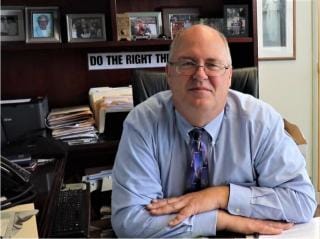
According to the privilege log, Hanley contacted Gagne and Suhl about a “media inquiry” on April 21—the same day the Dump emailed Hanley to ask about his political contributions to Sullivan. The log does not list any written replies to Hanley.
The district attorney’s office agreed to pay Butters Brazilian $350 an hour each for the two attorneys and $75 an hour for the work of clerks and paralegals, according to a copy of the July 2023 agreement.
Butters Brazilian charged taxpayers $22,226.51 for its work on the lawsuit as of April, according to invoices released by the district attorney’s office.
In addition to the money it spent on private legal counsel, the district attorney’s office paid the Dump’s legal fees in March after Green ordered it to do so. Prosecutors cut a $12,480.87 check to the Harvard Cyberlaw Clinic—which brought the total cost of the litigation to more than $34,000 of public money.
The Dump in January offered to waive its legal fees if Sullivan’s office would agree to adopt a policy requiring it to post its police misconduct records online so the public could more easily access them. However, the office declined the following day without providing an explanation.
When the Dump requested the Brady disclosures in January 2022, prosecutors initially blacked out the names of every police officer, whether they had been charged with crimes or faced internal investigations for alleged non-criminal misconduct.
At the time, Sullivan’s office cited the Public Records Law’s privacy exemption—even though this exemption says that it “shall not apply to records related to a law enforcement misconduct investigation.”
It wasn’t until May 2024 when Sullivan’s office agreed to disclose the names of officers who faced internal investigations. The reversal came about only after the Massachusetts Supreme Judicial Court ruled in a separate case that the Bristol County District Attorney’s Office couldn’t invoke the privacy exemption to conceal the names of officers in records related to a misconduct investigation of a fatal police shooting.
Before going to court, the Dump filed three administrative appeals with the state’s supervisor of public records. All three times, the supervisor found that Sullivan’s office had failed to justify redacting the names and case numbers under the privacy exemption or the CORI law.
Thanks for reading! Journalism like this takes a lot of time and effort. If you’d like to keep The Mass Dump running, please consider offering your financial support, either by signing up for a paid subscription to this newsletter below, becoming a Patreon supporter, or sending a tip via PayPal or Venmo. Your support pays for original investigative reporting like this. A monthly subscription is just $5.
Even if you can’t afford a paid sub, please sign up for a free one to get news about wrongful convictions, police misconduct, public records, and stuff like that—and please share this article on social media.
You can follow me on Bluesky and Mastodon. You can email me at aquemere0@gmail.com.
If you haven’t read it yet, check out my recent story about a Brockton police lieutenant who was caught making “materially false” statements in a sworn affidavit when applying for a search warrant.
 Andrew Quemere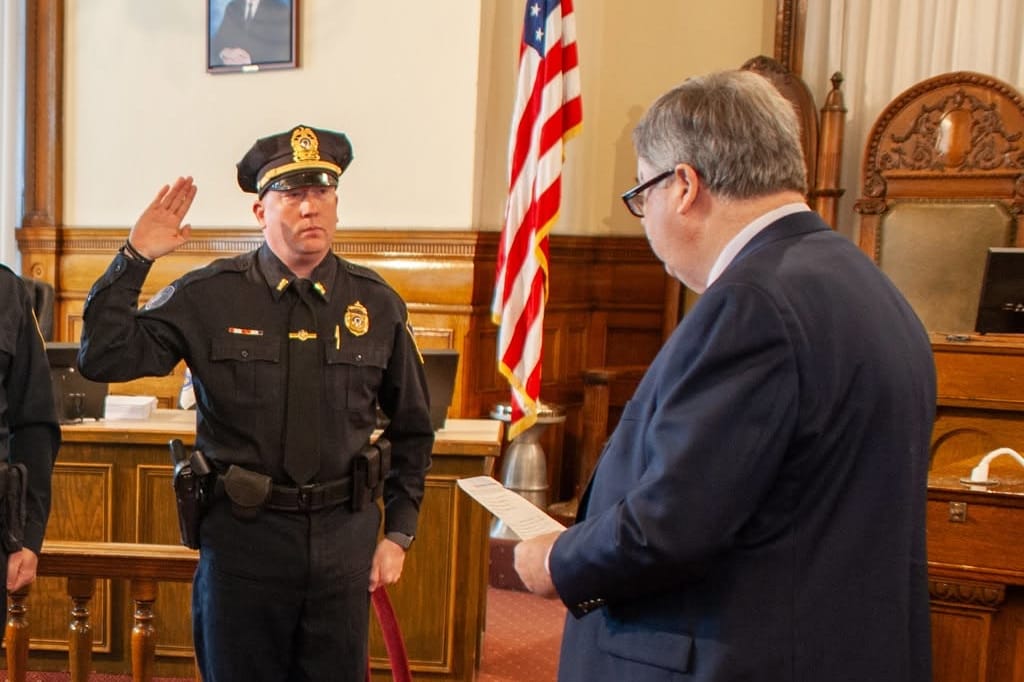
That’s all for now.